The NCAA Tournament is staying at 68 teams—for now. After months of discussion, the NCAA men’s and women’s Division I basketball committees announced Monday that they will not recommend expansion ahead of the 2026 edition of March Madness.
According to The Athletic, the NCAA’s senior vice president of basketball stated, “Expanding the tournament fields is no longer being contemplated for the 2026 men’s and women’s basketball championships.” He added that discussions about expanding to “72 or 76 teams” will continue, with further conversations expected ahead of the 2027 NCAA Tournament.
While many power-conference commissioners and coaches have supported expanding the field, most of the media and numerous coaches—including Arkansas’ John Calipari—oppose expansion, arguing that the current format is already ideal. Personally, the NCAA Tournament is my favorite postseason event to watch. In fact, I even wrote an essay for my Composition I class in May arguing against expansion.
The recent expansion talk began in January 2023, when the NCAA’s Transformation Committee recommended increased “access” to postseason play in any sport sponsored by over 200 Division I schools. However, the committee’s proposed threshold—25 percent of teams—would have expanded March Madness to over 91 teams, given that 363 schools currently compete in Division I men’s basketball. That number was widely seen as excessive, but in the current era of conference realignment, top conference commissioners are pushing for more of their teams to be included.
I’m glad the committee chose not to recommend expansion beyond 68 teams for 2026. Teams that don’t deserve to make the NCAA Tournament should not be allowed in, and if the field expands to 72 or 76, that’s exactly what will happen—watering down March Madness for me and many other college basketball diehards.
The 2025–26 college basketball regular season begins on Monday, November 3, with many exhibition games starting in mid-October. Selection Sunday will be held on March 15, followed by the best three weeks of the spring, as the NCAA Men’s Basketball Tournament concludes with the Final Four and National Championship on April 4 and 6 in Indianapolis.
Conference realignment has taken over collegiate athletics during my lifetime. The Big Ten added Maryland and Nebraska and the SEC added Missouri and Texas A&M over a decade ago. More recently, those same conferences grew even larger—the Big Ten expanded west with the additions of UCLA and USC, followed by Oregon and Washington, while the SEC made a similar move by bringing in Oklahoma and Texas, former Big 12 rivals of Missouri and Texas A&M. As a result, the Pac-12 collapsed—leading its remaining members to either join the Big 12 or stay put as they await the league’s potential rebuild ahead of the 2026–2027 academic and athletic year. Now, the unofficial ‘Power 4’ is debating the future of the College Football Playoff amid expansion talks, with the Big Ten and SEC pushing for greater influence. Additionally, ‘March Madness’ may expand from 68 to 72 or even 76 teams, and the College World Series field could grow as well.
In this post, I wanted to share my dream conference alignments, complete with proposed formats, protected matchups, and end-of-season rivalry games for both Thanksgiving weekend in football and the final weekend of the college basketball season. Enjoy my last planned post of the summer before my 2025–2026 NFL and College Football Previews drop on Sunday, August 10, and Saturday, August 16, respectively.
Italics signify that the school is a new member of the conference
ACC Clemson Duke Florida State Georgia Tech Maryland North Carolina North Carolina State Virginia Wake Forest
Football (8-Game Conference Schedule)
Key Principles: 1 permanent rivalry game for Thanksgiving Weekend 2 other protected rivalries 6 rotating opponents (3 per year on a 2-year cycle)
Format (6 teams, 3 per year): Each team rotates through the 6 others not protected over a 2-year span Home-and-home every 4 years, ensuring full rotation
Total: 3 protected games 5 rotating games
Protected Opponents: Clemson vs. Florida State Duke vs. North Carolina NC State vs. Wake Forest Clemson vs. South Carolina (non-conference) Duke vs. Wake Forest Florida State vs. Florida (non-conference) Georgia Tech vs. Georgia (non-conference) Maryland vs. Virginia North Carolina vs. NC State
Thanksgiving Weekend Rivalries (Play every year): Clemson vs. South Carolina (non-conference) Duke vs. Wake Forest Florida State vs. Florida (non-conference) Georgia Tech vs. Georgia (non-conference) North Carolina vs. NC State
Basketball (16-Game Double Round-Robin)
Final Weekend Matchups: Clemson vs. Georgia Tech Duke vs. North Carolina Maryland vs. Virginia NC State vs. Wake Forest Florida State gets a bye before the ACC Tournament like every other team does at some point throughout the regular season.
Baseball (24-Game Conference Schedule)
Format: 3-game weekend series vs. each of the 8 opponents Total: 8 opponents × 3 games = 24 games Rotate home/away annually ACC Baseball Tournament with top 6 teams (2 pools of 3 → title game)
Big 12 Baylor Colorado Iowa State Kansas Kansas State Missouri Nebraska Oklahoma Oklahoma State SMU Texas Texas A&M TCU Texas Tech
Football (9-Game Conference Schedule):
Format: 3 protected games 6 rotating games (cycle through remaining 10 teams every 2 years) 7 home-and-home cycles completed every 4 years Full round-robin every 4 years
Protected Opponents: Baylor vs. TCU Colorado vs. Nebraska Kansas vs. Kansas State (Sunflower Showdown) Kansas vs. Missouri (Border War) Nebraska vs. Missouri Oklahoma vs. Oklahoma State (Bedlam) Oklahoma vs. Texas SMU vs. TCU Texas vs. Texas A&M (Lone Star Showdown) Texas Tech vs. Texas
Thanksgiving Weekend Rivalries: Baylor vs. TCU Colorado vs. Nebraska Kansas vs. Missouri Kansas State vs. Iowa State Oklahoma vs. Oklahoma State Texas vs. Texas A&M Texas Tech vs. SMU
Basketball (18-Game Conference Schedule):
Pod-Based Rotation (3-permanent, 10-rotating): Play 6 teams twice (home and away) = 12 games Play 6 other teams once = 6 games Total = 18 conference games Full round-robin every 2 years Pods help maintain rivalries
Pod Pairings: Pod 1: SMU, Texas, Texas A&M, Texas Tech Pod 2: Baylor, Oklahoma, Oklahoma State, TCU Pod 3: Iowa State, Kansas, Kansas State, Missouri Pod 4: Colorado, Nebraska, rotating any 2 (geographic variety)
Final Weekend Showdowns: Baylor vs. TCU Colorado vs. Nebraska Kansas State vs. Iowa State Kansas vs. Missouri Oklahoma vs. Oklahoma State SMU vs. Texas Tech Texas vs. Texas A&M
Baseball (27-Game Conference Schedule):
Format: 9 weekend series (3 games each) = 27 games Rotate 4 opponents off annually (play 9 of 13 each season) Every team is played at least twice (home/away) every 3 years
Protected Series: Baylor vs. TCU Colorado vs. Nebraska Kansas vs. Kansas State Kansas vs. Missouri Oklahoma vs. Oklahoma State SMU vs. Texas Tech Texas vs. Texas A&M
Tournament: 8-team Big 12 Baseball Tournament Double-elimination based on standings
Big East Boston College Louisville Miami Pittsburgh Rutgers South Florida Syracuse UCF Virginia Tech West Virginia
Football (9-Game Round Robin Schedule)
Format: Rivalries are protected annually Full Round-Robin: Every team plays each of the 9 others once No Divisions Needed Top 2 teams meet in the Big East Championship Game at MetLife Stadium
Thanksgiving Weekend Rivalries: Boston College vs. Syracuse Louisville vs. Kentucky (non-conference) Miami vs. Non-Conference Opponent Pitt vs. West Virginia (Backyard Brawl) Rutgers vs. Virginia Tech South Florida vs. UCF (War on I-4)
Basketball (18-Game Double Round Robin) Format: Each team plays all 9 others home and away Total: 18 conference games
Final Weekend Matchups Boston College vs. Syracuse Louisville vs. Miami Pitt vs. West Virginia Rutgers vs. Virginia Tech South Florida vs. UCF
Baseball (27-Game Round Robin)
Format 3-game weekend series vs. every other team (9 × 3 = 27 games) Rotate home/away each year Every team plays every other once per season Big East Baseball Tournament: Top 6 teams (2 pools)
Protected Rivalries: Boston College vs. Syracuse Louisville vs. Miami Pitt vs. West Virginia Rutgers vs. Virginia Tech South Florida vs. UCF
Big Ten Illinois Indiana Iowa Michigan Michigan State Minnesota Northwestern Notre Dame Ohio State Penn State Purdue Wisconsin
Football (9-Game Conference Schedule)
Format: 3 Protected Games 6 Rotating Opponents (play every team at least twice in a 4-year cycle)
Protected Opponents: Illinois vs. Northwestern Indiana vs. Purdue Iowa vs. Minnesota Michigan vs. Ohio State Michigan State vs. Michigan Penn State vs. Notre Dame
Rotation Year 1: Play 6 of 9 remaining teams Year 2: Rotate in the other 3 + repeat 3 from Year 1 Home-and-home with every team every 4 years
Thanksgiving Weekend Rivalries: Illinois vs. Northwestern Indiana vs. Purdue Iowa vs. Notre Dame Michigan vs. Ohio State Michigan State vs. Penn State Minnesota vs. Wisconsin
Basketball (20-Game Conference Schedule)
Format: Play 7 teams twice (14 games) Play 6 teams once (6 games) Rotate annually to ensure all teams play home and away every 3 years
Protected Opponents: Illinois–Northwestern Indiana–Purdue Iowa–Minnesota Michigan–Michigan State Ohio State–Michigan Notre Dame–Penn State
Final Weekend Matchups: Illinois vs. Northwestern Indiana vs. Purdue Iowa vs. Notre Dame Michigan vs. Michigan State Ohio State vs. Wisconsin Penn State vs. Notre Dame
Baseball (30-Game Conference Schedule)
Format: 3-game weekend series vs. 10 of 11 opponents = 30 games Rotate 1 team off schedule each year Home/away flip-flop each season Every team plays all others at least twice every 3 years
Protected Opponents Illinois vs. Northwestern Indiana vs. Purdue Iowa vs. Minnesota Minnesota vs. Wisconsin Michigan vs. Michigan State Michigan vs. Ohio State Notre Dame vs. Ohio State
Pac-12 Arizona Arizona State Boise State California Oregon Oregon State Stanford UCLA USC Utah Washington Washington State
Football (9-Game Conference Schedule)
Format: 3 protected rivals (including the below) 6 rotating opponents Everyone plays all other teams home-and-home every 4 years
Protected Opponents: Arizona vs. Arizona State (The Territorial Cup) California vs. Stanford (The Big Game) Oregon vs. Oregon State (Formerly The Civil War) UCLA vs. USC Washington vs. Washington State (Apple Cup)
Thanksgiving Weekend Rivalries: Arizona vs. Arizona State Boise State vs. Utah California vs. Stanford Oregon vs. Oregon State UCLA vs. USC Washington vs. Washington State
Basketball (22-Game Double Round-Robin)
Format: Play all 11 other teamshome and away Total = 22 conference games Each team hosts 11 conference games per year
Final Weekend Matchups: Arizona vs. Arizona State California vs. Stanford Boise State vs. Utah Oregon vs. Oregon State UCLA vs. USC Washington vs. Washington State
Baseball (33-Game Round Robin)
Format: Each team plays a 3-game weekend series vs. every other (11 × 3 = 33 games) Home/away alternates each season All teams face each other yearly
Protected Matchups: Arizona vs. Arizona State California vs. Stanford Oregon vs. Oregon State UCLA vs. USC Washington vs. Washington State
Tournament: Top 8 teams qualify for Pac-12 Baseball Tournament Double elimination
SEC Alabama Arkansas Auburn Florida Georgia Kentucky LSU Ole Miss Mississippi State South Carolina Tennessee Vanderbilt
Football (9-Game Conference Schedule)
Format:
Protected Match Ups: Alabama vs. Auburn (Iron Bowl) Arkansas vs. LSU (Battle for the Golden Boot) Florida vs. Georgia (World’s Largest Outdoor Cocktail Party) Kentucky vs. South Carolina Ole Miss vs. Mississippi State (Egg Bowl) Tennessee vs. Vanderbilt
Thanksgiving Match Ups: Alabama vs. Auburn Arkansas vs. LSU Clemson vs. South Carolina (non-conference) Florida vs. Florida State (non-conference) Georgia vs. Georgia Tech (non-conference) Kentucky vs. Louisville (non-conference) Ole Miss vs. Mississippi State Tennessee vs. Vanderbilt
Basketball (20-Game Conference Schedule)
Format: Play 7 teams twice (home and away) = 14 games Play 6 teams once = 6 games Rotate annually for full home-and-home every 3 years
Protected Home and Home Match Ups: Alabama vs. Auburn Arkansas vs. LSU Kentucky vs. South Carolina Florida vs. Georgia Ole Miss vs. Mississippi State Tennessee vs. Vanderbilt
Final Weekend Match Ups: Alabama vs. Auburn Arkansas vs. LSU Kentucky vs. Tennessee Florida vs. Georgia Ole Miss vs. Mississippi State South Carolina vs. Vanderbilt
Baseball (30-Game Conference Schedule)
Format: 3-game weekend series vs. 10 of 11 other teams = 30 games Rotate 1 team off the schedule each season Cycle home/away yearly
Protected Series: Alabama vs. Auburn Arkansas vs. LSU Kentucky vs. South Carolina Florida vs. Georgia Ole Miss vs. Mississippi State Tennessee vs. Vanderbilt
Tournament: Top 8 teams in SEC Baseball Tournament Double-elimination format or pool play
Saturday, November 15 @ LSU 11 AM-12 PM CT, TBA Arkansas has not defeated LSU since Sam Pittman’s second season as head coach in 2021. The Tigers dominated the Razorbacks 34-10 last October on their way to a 9-4 season, which concluded with a win over Baylor in the Texas Bowl. Pittman’s only victory over LSU came in ‘Death Valley,’ but this may be Brian Kelly’s strongest team yet in Baton Rouge, in a year when many expect them to reach the College Football Playoff. LSU will face tough opponents in Clemson, Florida, Ole Miss, Texas A&M, and Alabama before hosting Arkansas. There’s a chance the Tigers could already have a loss or two by then—meaning a defeat in the ‘Battle for the Golden Boot’ might keep them out of the College Football Playoff for a sixth straight season.
So, if Sam Pittman’s job is still secure and LSU comes into the game at 7-2—or even better, 8-1 coming off a win over Alabama—the Tigers could potentially overlook Arkansas. The Razorbacks have taken advantage of LSU multiple times in the past, especially when the Tigers have played them following a matchup with Alabama. However, Garrett Nussmeier, one of the top quarterbacks in the SEC and college football, will look to ensure that doesn’t happen to his team.
LSU may not have full support from its fanbase for a game that kicks off between 11 a.m. and 12 p.m. CT, but they’ll certainly have the home-field advantage regardless. Nussmeier will benefit from a strong receiving corps that includes returner Aaron Anderson, Kentucky transfer Barion Brown, and Trey’Dez Green—posing a challenge for a relatively new-look Arkansas secondary. Tailbacks Caden Durham and freshman Harlem Barry lead a young running back room capable of delivering a season-defining performance against an Arkansas defensive line lacking depth. However, with the Tigers losing standout tackle Will Campbell and other key offensive linemen to the NFL, veteran Razorback defensive tackle Cameron Ball must make an impact in the backfield to limit the kind of explosive runs Arkansas fans have grown used to seeing from LSU’s ground game.
Defensively, LSU continues to wait for hybrid linebacker/safety Harold Perkins Jr. to return to the dominant form he showed as a freshman, as he enters his third year in Baton Rouge. Unleashing Perkins alongside fellow junior linebacker Whit Weeks against Arkansas’ improved offensive line could be a matchup that decides the game. The Razorbacks lost by just three points the last time they visited Baton Rouge, but that was with former quarterback KJ Jefferson. Second-year starter Taylen Green will face a less hostile atmosphere in a daytime game at Tiger Stadium, but one that still presents a major test—especially against what should be a revamped LSU defense under coordinator Blake Baker, now in his second season since returning from Missouri.
This game will be won by the team that makes the big plays throughout. With the benefit of playing in the friendly confines of Tiger Stadium, I’ll take LSU to beat Arkansas by a few scores.
Projected Score: LSU 38, Arkansas 21
Saturday, November 22 @ Texas 2:30-3:30 PM or 5-7 PM CT, TBA At this point, Arkansas’ dominant 40-21 win over Texas in 2021 feels like it happened a decade ago. The Razorbacks’ victory helped Longhorns head coach Steve Sarkisian realize the need to recruit depth along the offensive line and in the front seven, after Sam Pittman’s team gashed Texas for multiple rushing touchdowns and held standout running back Bijan Robinson in check.
Building off an 8-5 season in 2022, the Longhorns have since made back-to-back College Football Playoff semifinal appearances, proving that Sarkisian can both coach and build a program capable of competing in the rugged SEC. In their first season in the league, Texas lost only to Georgia during the regular season, fell to the Bulldogs again in the SEC Championship in Atlanta, and were eliminated by eventual national champion Ohio State in the College Football Playoff Semifinal at the Cotton Bowl.
When you think of Texas’ 2025 roster, your first thought has to be quarterback Arch Manning, who waited two seasons behind Quinn Ewers—now in the NFL with the Miami Dolphins—to get his shot as the starter. Despite his famous last name, Manning saw limited action during his first two years in Austin. Now, the pressure is on him to deliver alongside a new-look receiving corps that returns only junior Deandre Moore. Manning will look to spread the ball around to Moore, breakout candidate Ryan Wingo, and new starting tight end Jack Endries.
Last fall, expected starting running back CJ Baxter suffered a season-ending injury in camp, but the Longhorns now boast tremendous depth at the position. Baxter will have to compete with Quintrevion Wisner, who turned in a terrific 2024 campaign after stepping up in Baxter’s absence.
The excellence of Sarkisian and his staff extends to the defense. According to Athlon Sports, the Longhorns are expected to have the top defensive line, linebacker, and secondary units in the SEC—an impressive feat in just their second season in the conference. Defensive end Colin Simmons and linebacker Anthony Hill Jr. may be the best players at their respective positions in the country, while Malik Muhammad and Jaylon Gulbeau aim to build on their success in the secondary as they enter their third and fourth seasons of college football, respectively.
Arkansas last faced Texas on the road in Austin on September 27, 2008, suffering a brutal 52-10 loss. This year’s matchup may not be that lopsided if Arkansas tailbacks Braylen Russell and Mike Washington Jr. can find running room and create opportunities for quarterback Taylen Green and receivers O’Mega Blake, Raylen Sharpe, and Ismael Cisse. However, if the Razorbacks fail to get going offensively, Texas’ dominant defense will take over. Expect the Longhorns to win big at home over rival Arkansas.
Arkansas suffered its sixth loss in eight games against Missouri since the two schools became permanent Thanksgiving weekend rivals, following Missouri and Texas A&M’s entry into the SEC after leaving the Big 12. The rivalry has never truly resonated with Arkansas fans, especially after the SEC office took away the annual LSU matchup ahead of the 2014 season and replaced it with Texas A&M.
That said, Arkansas’ lack of success against Missouri has become a concerning trend for the program. The Razorbacks hold a 4–12 all-time record against the Tigers and have only beaten them once under Sam Pittman—in their 9–4 season in 2021. Missouri head coach Eli Drinkwitz, an Arkansas native, has taken joy in poking fun at the Razorbacks in the media, but his 21 wins over the past two seasons have made Arkansas fans recognize just how legitimate of a coach he is. While Arkansas chose Pittman, Drinkwitz left Appalachian State for Missouri—and so far, he’s made the most of that decision.
Drinkwitz has had to rebuild an offense that previously featured program standouts like quarterback Brady Cook and receivers Luther Burden and Theo Wease, all of whom entered the transfer portal. Former Penn State signal-caller Beau Pribula is expected to replace Cook, working alongside Mississippi State transfer Kevin Coleman Jr. and Illinois State transfer Xavier Lloyd at receiver. The Tigers will aim to replicate their 2023 success in the run game—led last season by Cody Schrader—with a new addition many around the program see as a similar player: former ULM tailback Ahmad Hardy, who rushed for 1,351 yards last year. Hardy will run behind an offensive line that includes several talented pieces, including former Oklahoma transfer Cayden Green at left guard and returning center Connor Tollison.
Defensively, the Tigers will look to improve in their second season under coordinator Corey Batoon. They certainly have the personnel to make that leap, with defensive tackle Chris McClellan, linebacker Triston Newson, nickelback Daylen Carnell, cornerbacks Dresden Norwood and Nichols Deloach Jr., and safety Marvin Burns. Razorback fans will also remember UNLV transfer safety Jalen Catalon, who returns to Razorback Stadium for the first time since leaving Arkansas after the 2022 season. The defense also added Big 12 Defensive Freshman of the Year Josiah Trotter from West Virginia at linebacker.
All that said, this Missouri team will come to Fayetteville ready to hand Arkansas a second consecutive home loss after dominating the Razorbacks 48–14 to end the 2023 season, which capped a disappointing 4–8 campaign for Sam Pittman’s squad. If Arkansas is going to win this game, the first half of the season must go well—because if it doesn’t, it’s hard to imagine Pittman still being around. As a result, it’s difficult not to pick Drinkwitz and Missouri to continue their success against Arkansas.
This article is the next part of a long series I’m doing highlighting the top athletes in lower level collegiate athletics. Last time I focused on the top 15 JuCo basketball players in the country and here I am focusing on the NAIA Basketball First Team All-Americans and their futures. NAIA, or the National Association of Intercollegiate Athletics, isn’t apart of the NCAA and only allow up to 8 full-ride scholarships for basketball. In my opinion, NAIA is still gritty like JuCo but is a lot less raw as NAIA institutions are four-year colleges allowing for much more development and consistency. NAIA players are compared to the likes of NCAA D3 and D2 players. I guess we’ll go ahead and jump right into it!
Disclaimer: This is not a ranking. All players listed are listed in the same order on the official NAIA website, naia.org.
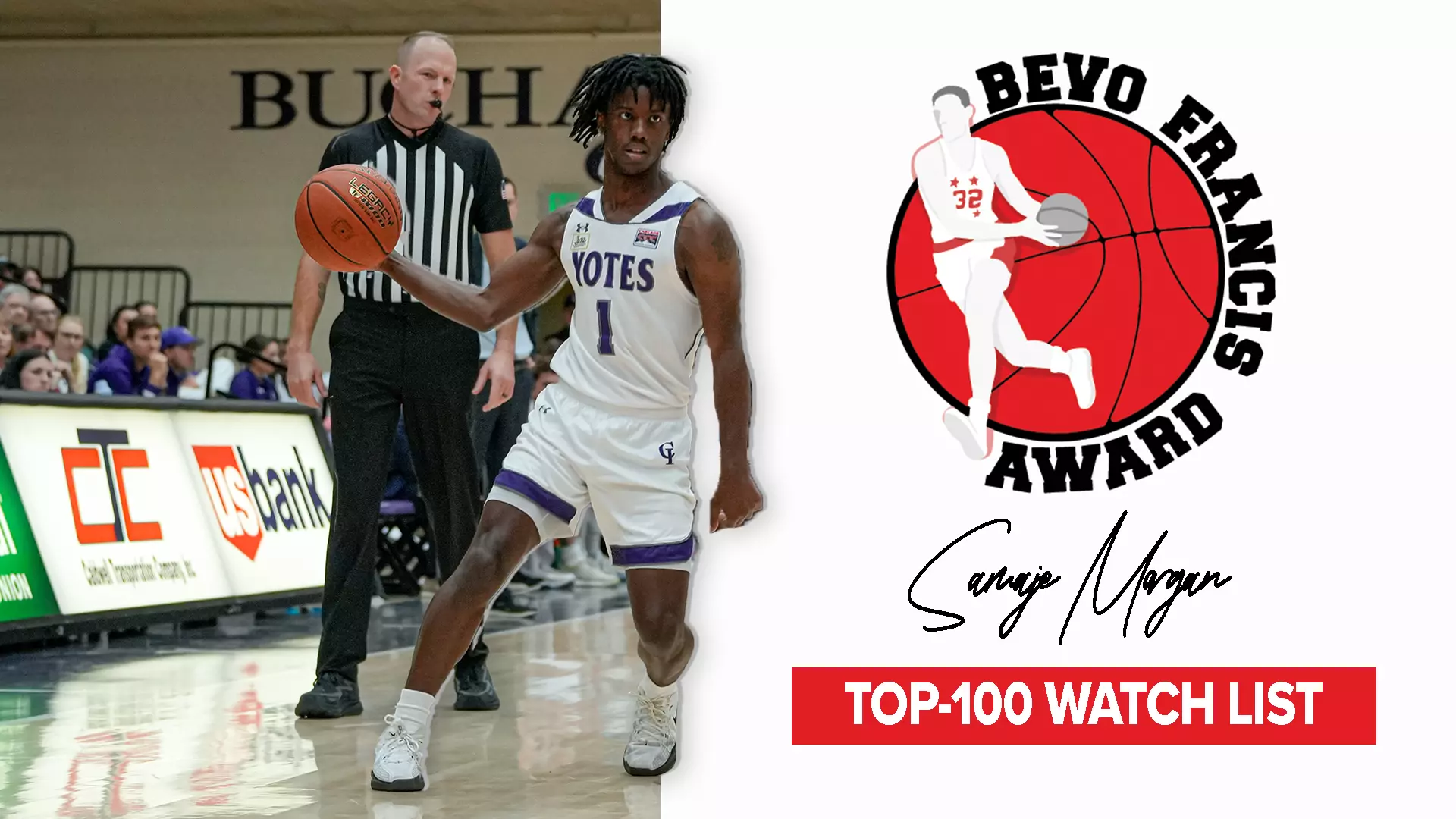
Image Courtesy: College of Idaho Athletics
Samaje Morgan, 5’10 Guard at College of Idaho, assumed return
I am unsure of what NAIA All-American Samaje Morgan is doing for his 4th year of college basketball. I assume he will return to the reigning champs, College of Idaho (Caldwell, ID) Yotes who won the NAIA National Championship in March against Oklahoma Wesleyan. Samaje had 28 points in the win, averaging 12 points, 4.6 assists, and 1.5 steals a game throughout the season. In three seasons at the College of Idaho, the Eugene, OR native has tallied almost 1,300 points. I think Samaje will help lead the Yotes to another successful season and probably look to be a graduate transfer afterwards.
Image Courtesy: Concordia University, Nebraska
Tristan Smith, Concordia University, 6’5 Graduate Transfer Forward Committed to University of Northern Iowa
The next First Team All-American is Tristan Smith, from Elizabeth, Colorado. Tristan has accomplished a lot in his four seasons at Concordia, and most recently winning GPAC Player of the Year and Defensive Player of the Year this past season. He is currently committed to play at the University of Northern Iowa, an NCAA Division 1 program. In 112 games (78 starts) with the Concordia Bulldogs, he totaled 1,500 points, 755 rebounds, 247 assists, 135 blocks, and 109 steals. His senior season, he averaged 20.5 points, 8.6 rebounds, 4.2 assists, 1.5 steals, and 1.7 blocks a game. He is a strong and craft finisher around the rim, able to muscle through contact for a dunk or spin to get a layup. I imagine he will see a good amount of action for UNI this upcoming season.
Image Courtesy: Cumberlands Athletics
Anthony Johnson, University of the Cumberlands, 6’2 Guard and Arizona State Commit
The guard out of Midfield, AL is arguably the biggest transfer out of the 12 players on the NAIA First Team All-American list. He is considered a 3 star transfer by 247 sports and has committed to Arizona State University. He had a huge impact this past season at the University of the Cumberlands, averaging 23.6 points, 4.9 rebounds, and 3.4 assists per game. He is a quick high flying player that can make his shot at a decent clip from three, shooting 34%. His field goal percentage is impressive as he shot 48% from the field while also averaging 1.75 steals a game on the defensive end. Before he was dominating at the NAIA level, he started his collegiate career in the JuCo ranks at Northeast Mississippi Community College, showing why these guys deserve to be highlighted. This guy went from playing at the JuCo level, made it up to NAIA, and now has the opportunity to play at the highest collegiate level in one of the biggest conferences in the nation.
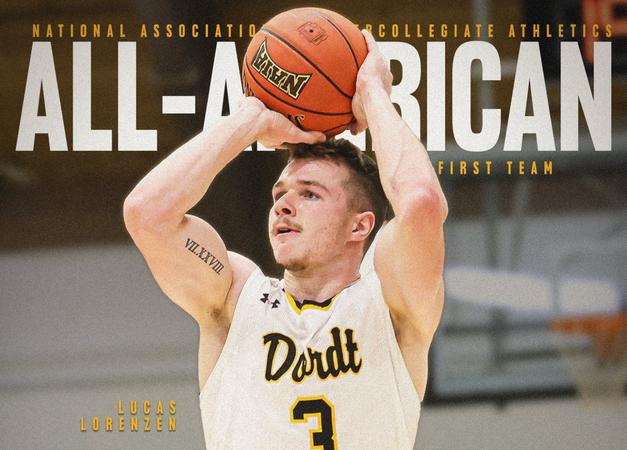
Image Courtesy: Dordt Athletic
Lucas Lorenzen, Dordt University, 6’4 Guard and transfer committed to Western Illinois
Another NCAA Division 1 commit coming from the NAIA level. Lucas Lorenzen has done a great job over his past three seasons at Dordt, and this past season he averaged 22.7 points, 6.1 rebounds, 2.1 steals a game. I couldn’t find any college highlights of Lucas, but his stats tell a lot. He shot 53% from the field this year, but he made 93 three pointers on 40% as well. I know he can attack the rim as well, but I wouldn’t be surprised if his main role is a strong 3 and D player. I can’t wait to see what he can do, and I expect him to play a major role for WIU very early on this upcoming season.
Image Courtesy: University of South Alabama Athletics
Peyton Law, Freed-Hardeman University,6’7 Forward and South Alabama Signee
Peyton is an athletic forward, and he low-key reminds me of Christian Braun when he was at Kansas. The South Alabama transfer won the NAIA National Championship with FHU last year in 2024, proving he can win. This past season he averaged 16 points, 6.7 rebounds, 1.6 steals, and 1.4 blocks per game. His versatility will help him play at least a decent role for South Alabama this year, with his athleticism and 39% three ball. If South Alabama is in Jonesboro this year for Sun Belt Conference play, I would love to see Peytons game in person.
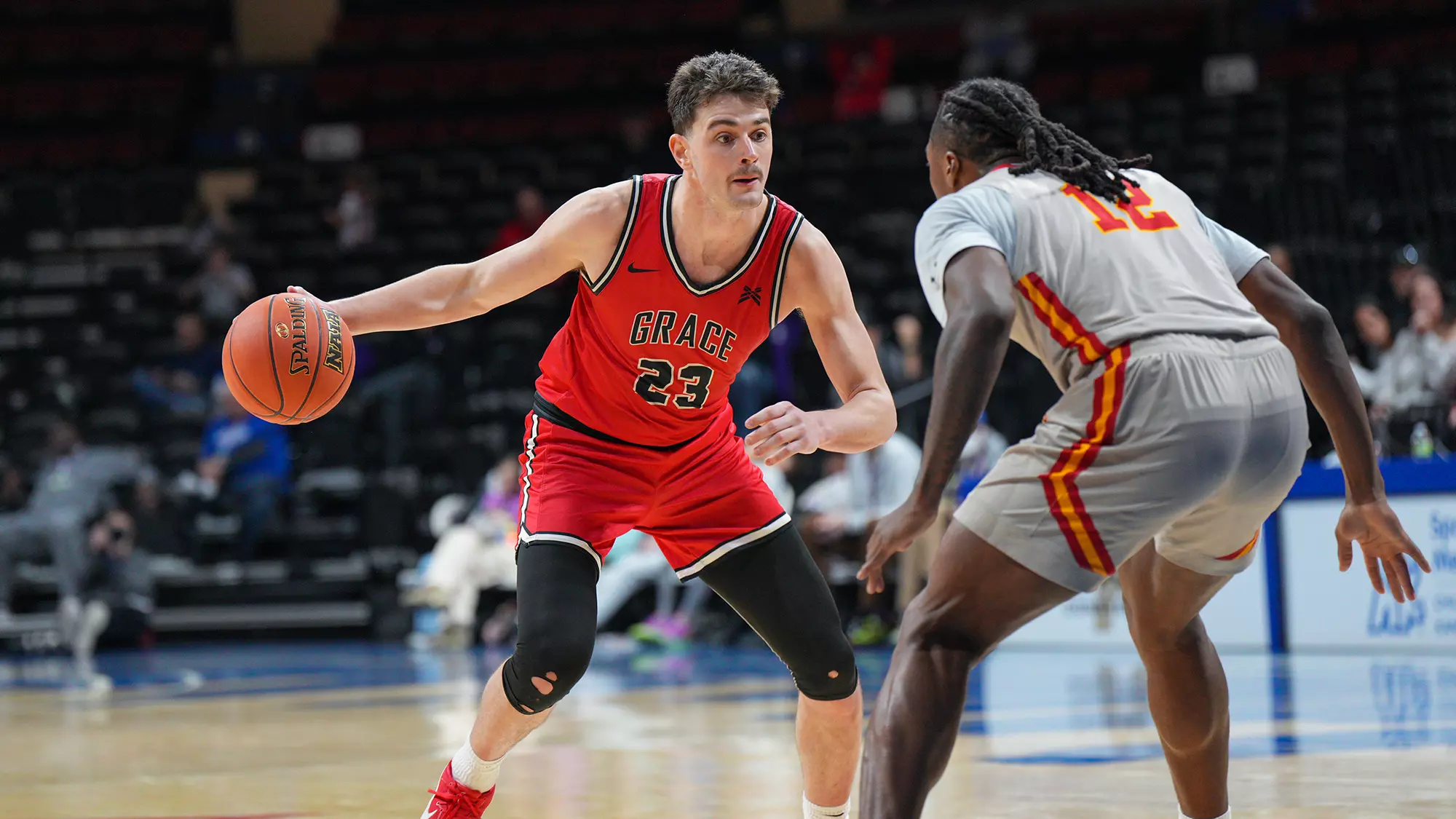
Image Courtesy: Grace College Athletics
Ian Scott, Grace College, 6’7 Forward and Indiana State Grad Transfer
Ian Scott was 2nd in the NAIA National Player of the Year race this year. The crazy thing is in his 4 seasons at Grace, this is the first season he had over three starts. He started 36 games out of 36 games total and did amazing. He averaged 18 points, 8.1 rebounds, 1.8 blocks, and 1.3 steals a game while shooting 63% from the field. During his 4 year tenure at Grace he also shot 65% as a career field goal percentage. Indiana State is getting a really smart and crafty player who can use his length as a forward to help him. He is a smart player and gets where he needs to be when he needs to be there. His family should be proud that he is getting to play at the NCAA D1 level for Indiana State, but even prouder because much of his family went to the school.
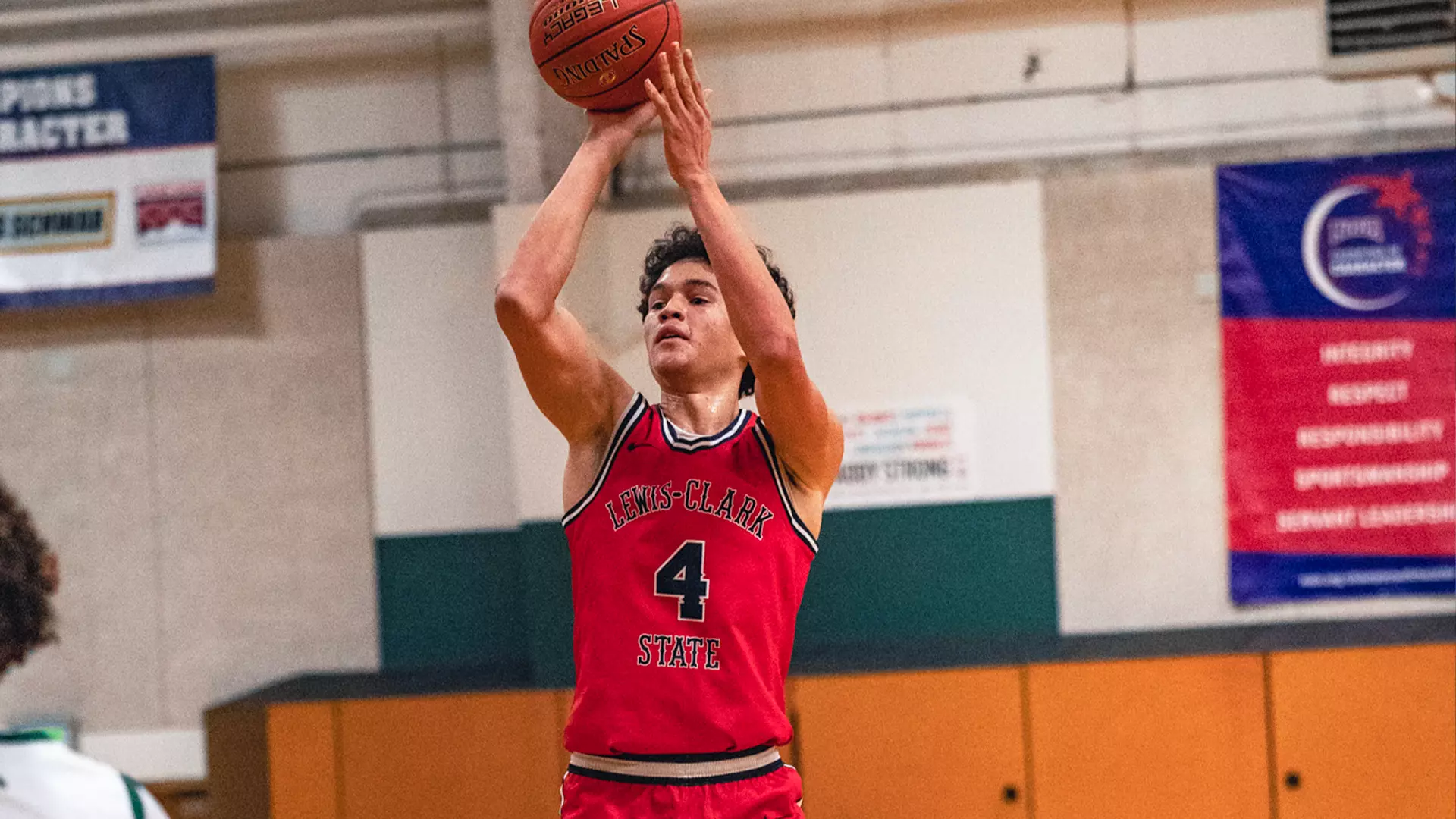
Image Courtesy: Lewis-Clark State College Athletics
Alton Hamilton, Lewis-Clark State, 6’8 Sophomore Forward and Eastern Washington Commit
Alton Hamilton showed out in his sophomore season. He averaged 17 points and 10 rebounds, being the only player in the Cascade Conference to averaged a double-double this season winning him Conference Player of the Year. Alongside this, he had a block a game. In his 2 years at LCSC, he shot 56% from field while making the right cuts to the basket. The Fontana, California native has a couple years to grow his game and adjust to the Division 1 level so we get to see multiple seasons out of him at EWU.
Image Courtesy: University of South Alabama Athletics
Chaze Harris, Life, 6’6 Junior Guard and South Alabama Signee
The Cleveland, Ohio native has made his way up from the JuCo ranks all the way to the Division 1 level now with a couple of stops on the way. Most recently, he played at Life University in Georgia where he averaged 19.7 points, 6.9 assists, and 6.6 rebounds a game while also averaging 2.1 steals. He did all of this shooting 59% from the field. Chaze is a quick long guard who can get to the basketball with ease. South Alabama looked for experienced hoopers at the lower levels to build a team and I can’t wait to see my Red Wolves play them. I am super excited to see Chaze play in person hopefully, as you can see the stats and they show he can do everything. He’s a high scorer with high efficiency, he can go and grab the rebound, but most importantly, he can pass the ball to where it needs to be. 6.9 assists at the college level is insane and I hope those numbers look similar in the Sun Belt Conference. I expect him to start or be the first guy off of the bench.
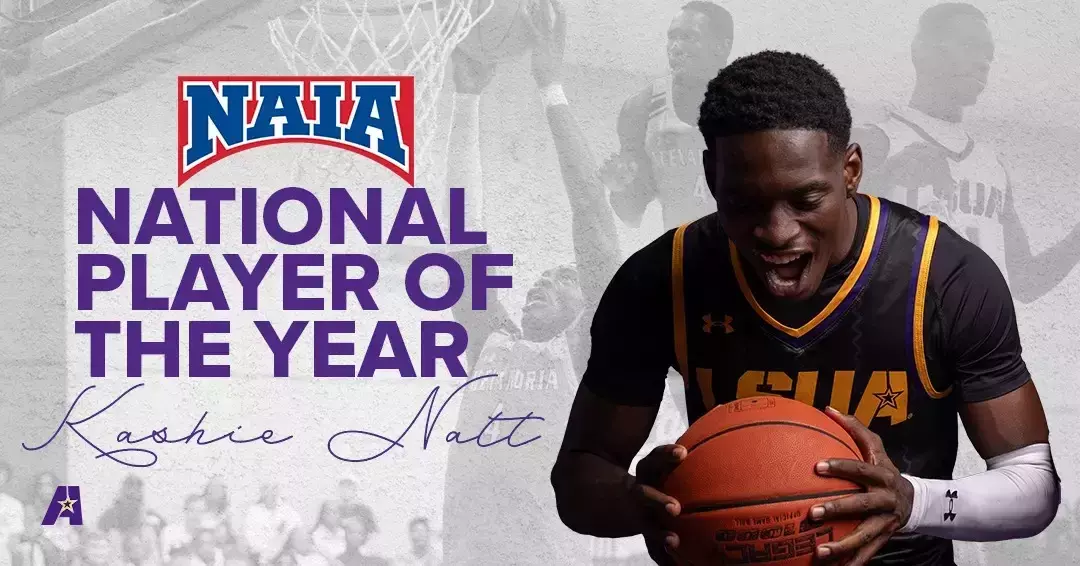
Image Courtesy: LSUA Athletics
Kashie Natt, LSU at Alexandria, 6’3 Guard Grad Transfer Signee with Sam Houston State
Kashie Natt, the NAIA National Player of the Year has decided to take his talents to Sam Houston State. Kashie has played a few games against Division 1 competition in early season NAIA-Division 1 game. This year, LSUA played Louisiana Tech where Kashie had 17 points in a loss. Before LSUA, Kashie played JuCo ball at Southern University- Shreveport. At LSUA, he averaged 20 points, 10 rebounds, 1.6 blocks, and 2 steals per game while shooting 48% from the field. Kashie has totaled over 1,400 points and 759 rebounds in 3 seasons at LSUA and I hope the athletic guard can continue his success at SHSU.
CJ Hall, Nelson University, 6’2 Guard and Grad TransferSignee at SIUE
CJ Hall is another hooper who started out playing for a community or junior college at McLennan Community College. CJ proved why he can play at a high level this past season by averaging 19 points, 4 rebounds, and nearly 4 assists per game at Nelson. On the defensive end he averaged 1.4 steals. Just the season before though, he averaged 23.5 points a game. His game is quick and he uses his shifty handled to either get to the basket or to get a mid range shot whether it be a fader or pull-up. SIUE is a program that can win the Ohio Valley Conference and can be a successful mid-major team for years to come.
Image Courtesy: DJ Talton on X
DJ Talton, Oklahoma Wesleyan, 5’10 Guard Grad TransferSignee with Buffalo
DJ is an energy player and who will bring a lot of effort to Buffalo this next season. At OWU this past season, he averaged 14 points, 4 rebounds, and 5 assists a game alongside 2.6 steals. He is going to be scrappy, he’s going to be quick, and he’s going to do what he needs to do. He can playmake for his team and can either finish at the rim in transition or use his pretty jumper to knockdown a midrange shot in the defenders face. Even though he may not have the highest amount of points, I think he just plays like a Division 1 level player and that will carry be a big part in helping his game translate.
Image Courtesy: University of Nevada Athletics
Kaleb Lowery, The Master’s University, 6’8 Forward Grad Transfer and Nevada Signee
Kaleb Lowery is a great long forward who will probably come off the bench at Nevada. Overplayed at MU, he averaged 14 or more points a game each season while starting all 76 games he has played in. This most recent season he averaged 19.4 points, 10.7 rebounds, and 1.2 steals a game. He makes great cuts and can post up against bigger defenders. His mid range shot is developing and looks nice so I think he can become a stretch 4 if needed. The San Diego native is leaving California to play basketball for an out of state school for the first time, but playing in the Mountain West will still keep him close to home.
Final Thoughts
The NAIA First Team All-Americans are a mix of all kinds of players, whether they be Grad Transfers (a lot), 2 year NAIA players, former JuCo players, wings, guards, etc. You have a player like Samaje Morgan coming off of an NAIA championship most likely staying which I respect and love then you have guys ready to play in one of the biggest conferences in the nation like Anthony Johnson. A lot of fans don’t realize that a lot of their favorite hoopers come from lower level schools including NAIA institutions and it’s always fun to see good players before they eventually make it to play at the highest level collegiately or pro.
Next I will be doing an article about the NCAA Division 3 First Team All-Americans so be on the lookout for that.
After the first 25 picks of Sunday’s MLB Draft, Arkansas had yet to produce a single selection. Later that night, their fortunes changed, as four Razorbacks came off the board in quick succession. Just one pick later, the Philadelphia Phillies selected right-handed pitcher Gage Wood, who threw only the third no-hitter in Men’s College World Series history three weeks ago against Murray State. Five picks after that, the Baltimore Orioles drafted shortstop Wehiwa Aloy, the winner of the Golden Spikes Award—given to the best amateur baseball player in the country—as the Men’s College World Series wrapped up in June.
Then, at picks 40 and 41, the Los Angeles Dodgers selected Arkansas ace Zach Root and outfielder Charles Davalan with back-to-back picks. Both Root and Davalan earned All-America and All-SEC honors following outstanding 2025 seasons. The four selections bring Arkansas baseball’s all-time total to 14 players chosen on Day 1 of the MLB Draft.
Arkansas tied SEC rival Tennessee with four selections on Day 1 of the 2025 MLB Draft. It also marked the first time multiple Arkansas players were selected in the first round of the same draft.
On Day 2, Dave Van Horn’s club saw several more players drafted. At pick 148, the Boston Red Sox selected right-handed pitcher Christian Foutch. Ten picks later, the Kansas City Royals picked another right-handed pitcher, Aiden Jimenez. Later, with the 187th pick in the 2025 MLB Draft, the Atlanta Braves selected left-handed pitcher Landon Beidelschies. At pick 203, the Pittsburgh Pirates selected third baseman Brent Iredale. Another right-hander, Ben Bybee, went off the board at pick 236 to the San Francisco Giants. Outfielder Justin Thomas was selected with the 336th pick by the Houston Astros.
The Razorbacks had to wait until pick No. 400 for an incoming player to be selected. Ball State transfer shortstop Dylan Grego was taken by the San Diego Padres with that pick. Earlier news that Arkansas’ top incoming freshman recruit, shortstop Landon Schaefer (who was later selected by the Phillies in the 20th round), had withdrawn from the MLB Draft now carries even more significance as Grego weighs his decision between signing with the Padres or heading to the Hill. In the 15th round, Fort Smith Northside right-handed pitcher and Razorback commit McLane Moody was drafted with the 443rd overall pick. Shortly after, Arkansas’ second-ranked incoming freshman and top pitching recruit, Jordan Martin, announced his decision to withdraw from the draft and head to campus.
After Martin’s decision was made, another Hog was drafted in the 16th round, as the Milwaukee Brewers selected right-handed pitcher Parker Coil with the 485th pick. With 11 players drafted following Coil’s selection, the Razorbacks tied the program’s single-season record set originally in 2013 and later matched in 2018. That number tied Florida State for the most in the country. Razorback right-handed pitcher Dylan Carter signed a free agent deal with the San Francisco Giants, while outfielder Logan Maxwell did the same with the New York Yankees. Additionally, according to multiple reports, Little Rock transfer pitcher Jackson Wells has opted to sign a free agent contract with the Houston Astros instead of heading to Fayetteville.
Another successful MLB Draft for Dave Van Horn’s Arkansas Razorbacks means reloading will once again be necessary through the transfer portal and high school ranks—something he’s already been working on. The Razorbacks will set their sights on the program’s first national championship when they open the season in Arlington at the Shriners Children’s College Showdown.
More college baseball content will return to the blog this coming spring.
Arkansas basketball will begin its 2025–2026 campaign in just 112 short days. The media got its first glimpse of a summer practice last Wednesday. After the session wrapped up, John Calipari and a select group of players—guards DJ Wagner and Meleek Thomas, and forwards Trevon Brazile and Nick Pringle—spoke to the media.
Calipari said, “I like where we are… it’s July 7th.“ That’s a promising sign for Arkansas fans.
Below is a look at the projected rotation, the incoming freshman and transfer classes, players who have exited the program through graduation, the pros, or the transfer portal, as well as the updated schedule and other key offseason developments.
So, here’s everything you might have missed from Fayetteville since Arkansas’ exit from the NCAA Tournament in March.
Projected Rotation
Starters Darius Acuff, Guard (Freshman) DJ Wagner, Guard (Junior) Karter Knox, Forward (Sophomore) Trevon Brazile, Forward (Senior) Malique Ewin, Center (Senior)
Bench Meleek Thomas, Guard (Freshman) Billy Richmond, Forward (Sophomore) Nick Pringle, Center (Grad Senior) Isaiah Sealey, Forward (Freshman) Paulo Semedo, Center (Freshman) Karim Rtail, Forward (Freshman) Elmir Dzafic, Center (Freshman) Jaden Karuletwa, Guard (Sophomore) Ayden Kelly, Guard (Sophomore) Amere Brown, Guard (Freshman)
2025 Class (via 247sports composite) 10.Meleek Thomas (#2SG) Pittsburgh, PA (Overtime Elite – City Reapers) 12.Darius Acuff (#2PG) Detroit, MI (IMG Academy) 75.Isaiah Sealey (#18SF) Springdale, AR (Springdale) Paulo Semedo (C) Orlando, FL (West Oaks Academy) Elmir Dzafic (C) Tuzla, BiH (KK Bosnai) Karim Rtail (PF) Beirut, LB (Neptūnas-Akvaservis) Amere Brown (PG) Pittsburgh, PA (Woodland Hills)
Transfer Additions (via 247sports) 105.Malique Ewin, Center (Senior) Former School: Florida State 127.Nick Pringle, Center (Graduate Senior) Former School: South Carolina
Transfers Out Zvonimir Ivisic, Center (Junior) New School: Illinois Melo Sanchez, Guard (Sophomore) New School: TBA Casmir Chavis, Guard (Freshman) New School: UT-Arlington Boogie Fland, Guard (Sophomore) New School: Florida
Graduated or Going Pro Jonas Aidoo, Forward/Center Johnell Davis, Guard Adou Thiero, Forward
2025-2026 Schedule (As it looks right now) TBA @ Memphis (Exhibition; Fred Smith Classic) TBA Baylor TBA @ Michigan State 11/3 Southern 11/11 Central Arkansas 11/27 Duke (Chicago) 12/3 Louisville (ACC/SEC Challenge) 12/13 Texas Tech (Dallas) 12/16 Mount St. Mary’s 12/20 Houston (Brooklyn) TBA Auburn TBA Kentucky TBA LSU TBA Missouri TBA South Carolina TBA Tennessee TBA Texas TBA Texas A&M TBA Vanderbilt TBA @ Alabama TBA @ Auburn TBA @ Florida TBA @ Georgia TBA @ LSU TBA @ Ole Miss TBA @ Mississippi State TBA @ Missouri TBA @ Oklahoma
On the Razorback Sports Network postgame show following Arkansas’ dominant mid-December win over UCA in North Little Rock, John Calipari announced that the Razorbacks will play in Chicago on Thanksgiving Day 2025. He also stated that Baylor will make a return trip to face Arkansas at Bud Walton Arena and that the Razorbacks will host a game in the ACC/SEC Challenge next season. Then, on March 6, it was officially announced that Arkansas will face Duke at the United Center on Thanksgiving Day in primetime.
On March 11, CBS college basketball reporter Jon Rothstein reported that Boston Celtics Director of Scouting Remy Cofield was leaving the NBA to become the general manager of the Arkansas athletic department.
On June 7, Team B Media CEO Josh Bertaccini reported that “[John] Calipari confirms Arkansas will go back to New York to play Houston.” It was later confirmed that the Razorbacks will face the Cougars on December 20 at the Barclays Center in Brooklyn, New York.
On June 11, Jon Rothstein reported that matchups for the 2025 ACC/SEC Challenge had been finalized. The following day, the Arkansas men’s basketball social media team confirmed that the Razorbacks will host Louisville on December 3 inside Bud Walton Arena.
On June 14, Bertaccini also reported that Calipari announced two additional games: a road matchup against Michigan State in East Lansing and a neutral-site game in Dallas against an opponent yet to be announced (Arkansas faced Baylor there last season). The Razorbacks will host Michigan State in Fayetteville the following season as part of a home-and-home series. On June 19, John Calipari announced that the Razorbacks will face Texas Tech in Dallas (later confirmed that it will be on December 13). It will be a rematch of last season’s heartbreaking Elite 8 loss to the Red Raiders.
On June 18, Arkansas’ SEC opponents for the upcoming season were announced. The Razorbacks will play home-and-home series with permanent rivals LSU and Missouri, as well as a rotating home-and-home against Auburn. They will host Kentucky, South Carolina, Tennessee, Texas, Texas A&M, and Vanderbilt, and will go on the road to face Alabama, Florida, Georgia, Ole Miss, Mississippi State, and Oklahoma.
With the 36th pick in the 2025 NBA Draft, the Los Angeles Lakers selected Razorback forward Adou Thiero. He became the first Razorback to be drafted under Coach John Calipari since they both arrived at Arkansas following their departure from the University of Kentucky over a year ago.
Before the action began in the NBA Summer League, the Los Angeles Lakers announced that Adou Thiero would not participate due to a left knee injury he sustained back in February. Thiero’s teammate, guard Johnell Davis, joined the Orlando Magic for Summer League play.
On July 7, HawgBeat’s Jackson Collier reported that Arkansas will face Southern on November 3 and Central Arkansas on November 11 in early nonconference play inside the friendly confines of Bud Walton Arena. The Razorbacks crushed the Bears 82–57 last season in North Little Rock at Simmons Bank Arena and have not faced the Jaguars since defeating them 79–44 during the 2020 season.
During John Calipari’s post-summer practice interview, he discussed Arkansas’ upcoming exhibition matchup against Memphis, which will benefit St. Jude Children’s Research Hospital. Hitmen Hoops first reported the potential matchup between the Razorbacks and Calipari’s former team, where they plan to honor several of his former players from his time with the Tigers. Calipari also mentioned that they hope to honor the late FedEx founder, Frederick Smith, by naming the game the Fred Smith Classic. The date for the exhibition is still to be determined.
Image Courtesy: Salt Lake Community College Athletics
With this post, we’re going to have a first look into a series of posts I (Dylan Wilson) am doing regarding lower levels of a collegiate athletics. I will look at the top 15 JuCo basketball players according to jucorecruiting.com first, then I will look at NAIA transfers and top guys, as well as NCAA Division 3 and 2. I can admit, Carter knows a lot more about Division 1 athletics than me, but I just love the grind of the lower levels, where guys are constantly fighting to move up to places like Division 1 institutions. If I give a player comparison, it may be inaccurate, so just a warning.
Image Courtesy: Xavier Edmonds on X
1: Xavier Edmonds, TCU Commit
The number one JuCo player according to jucorecruiting.com is Xavier Edmonds. Edmonds comes from Salt Lake CC in Salt Lake City, UT by way of California. Xavier is a 6’8 Power Forward committed to TCU. At SLCC, he played 53 games over two seasons, starting 45. During his time there, he averaged 16.8 points, and 8 rebounds a night, with over 2 blocks a night as well. This past season, he averaged 21 points per game, showing he can score at an elite level. Looking at his highlights, he reminds me a little bit of a Derik Queen, but that might just be me. He can get to the basketball on his own, he can stretch the floor at decent level and can get his own rebounds to get putbacks. I expect to see a lot of Edmonds at TCU this season, especially being the only big coming in with their recruiting class.
Image Courtesy: University of Washington
2: Mady Traore, Washington Commit
The number 2 JuCo player is Mady Traore, out of Frank Phillips College in Borger, TX. The 6’11 Center originally played at New Mexico State and the University of Maryland, and is now committed to play at the University of Washington. At FPC, he averaged 13 points and 8 rebounds a game. Though his 3 ball was not the most efficient this past season, he has a jumper that can be trusted if developed. The most impressive thing I saw from his game was his ability to soar towards the hoop. Traore can fly for his size and dunk the ball over defenders. If his game has developed and matured since he last played Division 1 basketball, he should be just fine at UW this year. Washington is bringing in a pretty good class this year, but I hope Mady can see the court more than he did his first two seasons playing collegiate basketball. From what I’ve seen, Coach Sprinkle at Washington truly believes in his skillset.
Image Courtesy: 247 Sports
3: Abdul Bashir, Auburn Commit
The number 3 guy, arguably number one is Omaha native 6’7 Combo Guard/SF Abdul Bashir. Abdul is an Auburn commit coming from Casper College in Casper, WY. This season in 31 games, he averaged 27 points, 4 rebounds, and 4 assists per game on good efficiency shooting over 40% from the field and 37% from 3. In two seasons at CC, he has tallied over 1400 points. 247 sports has him listed as a Small Forward, but I definitely see him as a combo guard. Bruce Pearl has done a really good job with craft and shifty guards at Auburn, so I think Abdul will be a really good bench piece for them. As much of a bias that I have against Auburn as an Arkansas fan, I believe Abdul can be an important piece for Auburn and help with the push for another tournament run. This guy can really score from anywhere and however he wants. He can breakdown defenders and drive to the hoop or he can shoot from deep, it really doesn’t matter. He can play at his own pace then speed things up which is really important for guys, and this guy is just a straight hooper.
Image Courtesy: South Plains College
4: Arterio Morris, most recently at South Plains College
Number 4 is 6’3 Combo Guard Arterio Morris out of South Plains College. Arterio is a former 5 star recruit out of high school who originally played for Texas. Now I don’t really know much about Arterio’s current situation and what’s next for him. There’s no news on where he will for sure be playing next season and there isn’t any recent social media activity on Instagram. This year he played 23 games at SPC in Levelland, TX where he averaged 12 points, 4 rebounds, and 2.4 assists a game. His efficiency wasn’t perfect and he only started 9 games, but we’ve seen how he played in high school, and he honestly wasn’t terrible his freshman year at Texas. I believe if his unfortunate circumstances at Kansas didn’t occur, he could have really made a jump. I hope Arterio can finish out his last year or so of college basketball on a good note. Also, if you see this Arterio, my bad for the picture.
Image Courtesy: Albuquerque Journal
5: Antonio Chol, New Mexico Commit
Number 5 is Garden City Community College (Garden City, KS) 6’9 Power Forward, Antonio Chol. Chol, from Buffalo, NY spent his first two seasons of college basketball at Rutgers, playing only 11 games. Now, his next destination is the University of New Mexico. At GCCC, he showed out. He played 3o games averaging 19.5 points and 7.6 rebounds a game on 47% from the field, just under 40% from 3, and 83% from the free throw line. This guy can play. For his size he can break down defenders and shoot over them whether it be on dribble pull ups or fade aways. I think he can be an immediate impact player for the Lobos. Though he was considered a PF out of high school by 247 Sports, he is for sure a guard now. I think this new chance back at the Division 1 level and New Mexico being a talented program, I could see Antonio being a dark horse draft guy, at least I think his game could translate.
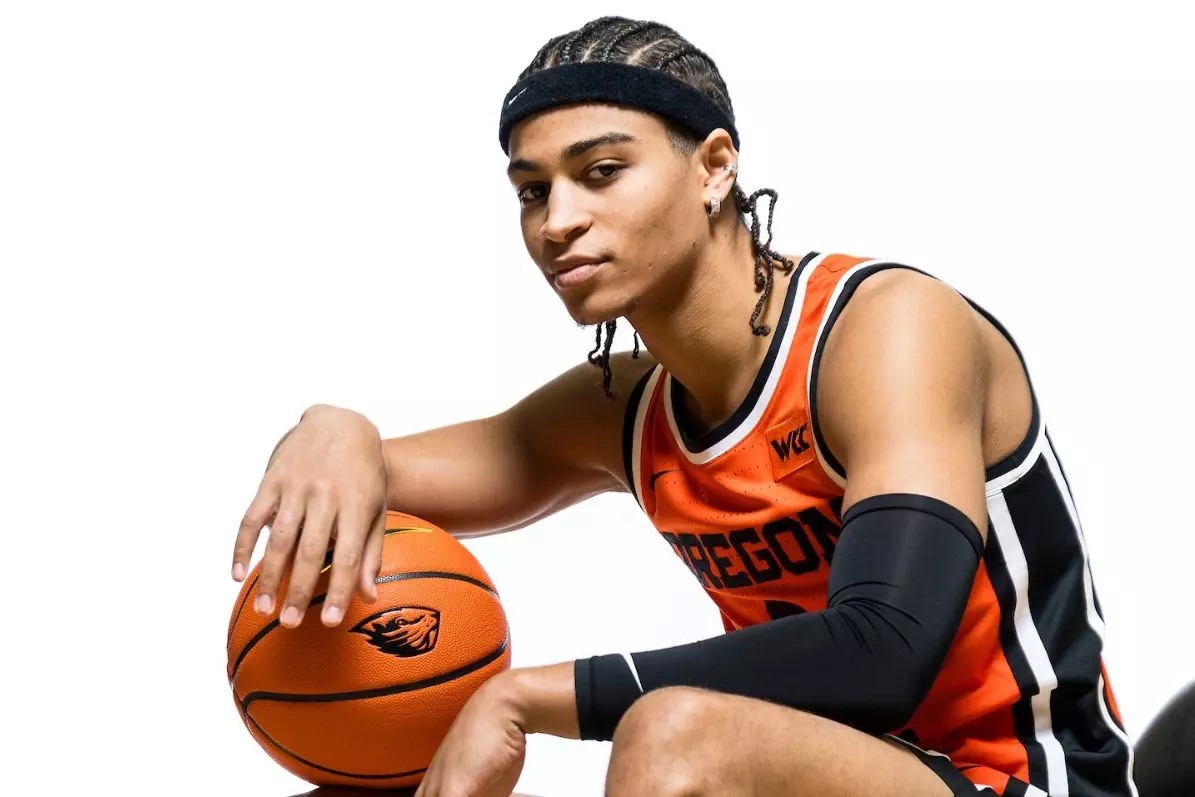
Image Courtesy: Oregon State University
6: Keziah Ekissi, Oregon State Commit
The number 6 JuCo player in the country is the 6’3 Guard Frenchman Keziah Ekissi. Keziah played at Howard College in Big Spring, TX this past season where he averaged 12.3 points per game on 45% from the field and 43% from 3 but is now committed to Oregon State. He looks like a strong guard with a great knack for passing alongside the ability to knock down the three ball. Before playing JuCo, he played in the U21 pro ranks for Cholet in France. I love European players, and one reason is their experience and advanced skillset. With a year under his belt in an American style of play, he should be able to make an immediate impact. Even though his 12 points per game isn’t as much as the guys ranked above him, one thing Keziah brings is elite experience at such a young age. I can see him playing 2-3 years at the Division 1 level before being a pick in the NBA draft. After watching this guys highlights, I love his game and I hope to keep up with him for the rest of his career. Beautiful game, seriously.
Image Courtesy: Nevada Men’s Basketball
7: Vaughn Weems, Nevada Commit
The 7th best JuCo player is the 2nd leading JuCo scorer, 6’5 Guard Vaughn Weems from Federal Way, WA and most recently playing at North Idaho College in Coeur d’Alene, ID. Vaughn is an all around 2-way player. At NIC he averaged 26.7 points and 8 rebounds per game. He also averaged 3 steals. This guy should be a good all-around player for Nevada after playing two seasons at NIC. Weems is a multidimensional player able to do whatever a team needs him to do, and I expect him to play the 2 or 3 off of the bench, if he doesn’t get himself the starting job by the end of the season.
Image Courtesy: Isaac Taveras on X
8: Isaac Taveras, Southern Miss Commit
Number 8 is the 6’5 Guard, Isaac Taveras. The Santo Domingo, DR native most recently played at South Plains College, yes the same South Plains as Arterio Morris. SPC went 32-3 this past season and Taveras, also a former Division 1 player played a big part in their success. Taveras averaged 16 points and 8 rebounds a game this year. Taveras is a crafty guard who originally played at Fresno State where he played 22 games and didn’t do too bad averaging a little under 4.8 points. He should be able to contribute at Southern Miss.
Image Courtesy: EuroBasket
9: William Beugre-Kassi, most recently at Indian Hill CC
The 9th ranked JuCo hooper is 6’8 Wing, William Beugre-Kassi from France who most recently played 2 seasons at Indian Hills Community College (Ottumwa, IA). He averaged 9.8 points and 5.7 rebounds per game. He is a high flying wing who has a developing left handed jumper. He uses quick crossovers and strong drives to dunk the ball with ferocity. With interests from multiple division 1 schools and still uncommitted, I imagine William can develop into a starting wing at the mid-major level in the near future.
Image Courtesy: College of Charleston Athletics
10: Chol Machot, College of Charleston Commit
The 10th ranked JuCo player is the 7’0 Center out of Florida SouthWestern State (Fort Myers, FL) by way of Melbourne, Australia. The redshirt freshman and former Mississippi State commit averaged 11.6 points, 6.5 rebounds, and 2.7 blocks a game in 27 games. His efficiency and versatility is the most impressive part of his game as he shoots over 60% from the field and 36.6% from 3. He is long but quick and can drive or cut to the basket and get the easy dunk, or he can even catch and shoot on pick and pops with signs of developing off the dribble shooting. I can see him coming in as a possible starter or the first big off of the bench.
Image Courtesy: On3.com
11:Ade Popoola, Tulsa Commit
Ade Popoola, a 6’5 Guard from St. Louis and most recently playing at Moberly Area CC (Moberly, MO) for the past 2 seasons is the 11th ranked JuCo prospect in the nation. Averaging 18.6 points and 9.8 rebounds per game, he has proven that he is worth a Division 1 scholarship. Ade can score from area, whether he is finding his own shot from 3, driving to the basket, or coming off hand offs and catch and shoot 3. He is also very efficient, shooting 49% from the field, 46.5% from 3, and 82% from the foul line. I believe that even if he doesn’t become a star player, his game will translate well no matter what and his floor is a 7-8th man off the bench, but I find that highly unlikely with his ability to score in so many ways.
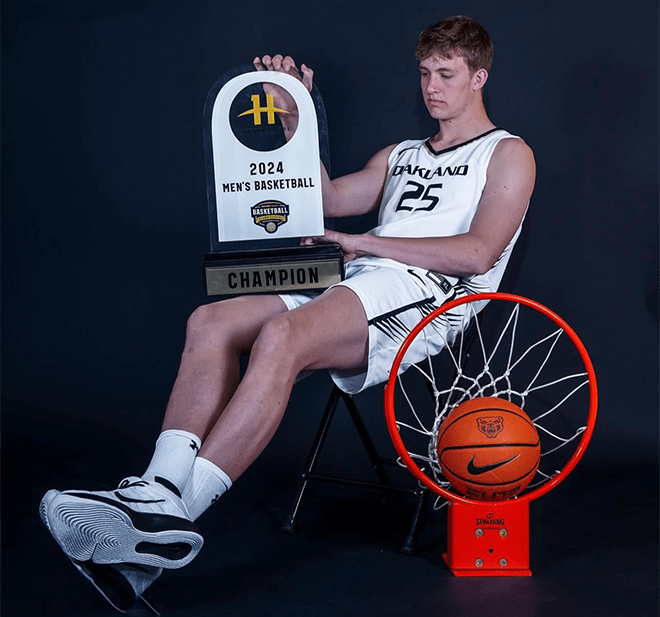
Image Courtesy: On3.com
12: Isaac Garrett, Oakland Commit
Isaac Garrett, a 6’9 PF originally from Pleasant Grove, UT and playing just an hour and a half south for the last two seasons at Snow College in Ephraim. Isaac averaged 14 points, 7 rebounds, and 2.4 stocks a night with good efficiency from the field shooting 53%. Oakland doesn’t have a pretty recruiting class but Isaac is a bright spot in the that regards. He reminds me of a less athletic (no offense to Isaac) Grant Nelson, but with better post of game. Isaac shot alright from 3 his first season, shooting 34% but he upped the volume of shots this past season, though falling to 20% from behind the arc. If he can work on his shooting consistency, he can be a problem at Oakland, especially after a year at the Division 1 level.
Image Courtesy: Wichita State Athletics
13: Dre Kindell, Wichita State Commit
Dre Kindell, a 6’0 Guard from Cincinnati, OH who played the last two seasons at Barton CC in Barton County, KS is ranked as the 13th best JuCo player in the nation. He averaged 15.8 points, 5 assists, and 3 rebounds a game on 42% shooting from the field. His game reminds me of Trey Burke’s at least when Dre does his mid range pull-ups. I think that is my favorite part of his game. I really hope he can contribute next season. His playmaking will be what makes him great though, as you don’t see a lot of guys averaging 5 assists in the college ranks. He uses his quickness and handles to speed by defenders to either get a mid range jumper, layup, or he can quickly dump the ball inside for a nice assist. From what I’ve seen, he makes the players around him better and that is the most important thing in the long run. Like I said with Keziah Ekissi, I would love to keep up with this guys career. I love guards who really love to play-make and share the ball.
Image Courtesy: Emondrek Erkins-Ford on X
14:Emondrek Erkins-Ford, Jacksonville State Commit
Ranking 14th in the nation is the Chicago native and 6’9 Forward, Emondrek Erkins-Ford, from Eastern Florida State College (Cocoa, FL). Emondrek is a good back-to-the-basket forward who can post up and get a bucket. He uses pump fakes in the paint to get his opponents to jump, allowing for an easier basket at the rim. He has spent the last two seasons at EFSC, and most recently averaged 15.6 points, 6.7 rebounds, 1 steal, and 1.8 blocks a game. To me, he seems like a gritty player who will do what he needs to do. He plays strong and gets to the rim if he isn’t posting up, but he can also look to guard multiple positions on the court. For a team like Jax State, I can see him making an impact early on.
Image Courtesy: JuCo Roundup on X
15: Kedar Bodie, North Alabama Commit
Rounding out the top 5 is Augusta, GA native and R-So from Bishop State CC in Mobile, AL. Bodie, a 6’3 Combo Guard averaged 21 points per game this past season while playing only 18 minutes a game. He has been quite efficient in his scoring, shooting 45% from the field and 34.5% from three. He averages 6.5 rebounds, 2.1 steals, and 1.1 blocks a game which speaks just as loud has his great scoring ability. He can score by creating his own shots or he can score off ball as well. I hope I am not hyping him up too much, but the way he plays can be very useful at a high level in Division 1. We will wait to see his first season at UNA, but I wouldn’t be surprised if he shocks a lot of people his first season. I choose not to talk down about players or disrespect their game, but when I say I like someone’s game and think it will translate, I mean it.
Final Thoughts
Well, now that I’ve gone over the top 15 JuCo prospects this year, I guess I have to choose my favorite player. I think it’s a tough decision, but it’s for sure between Keziah Ekissi and Kedar Bodie. These two guys represent the play styles and origins I love the most. I love raw European players who come over and show flashes but take time to adjust to the American game and I also love gritty JuCo guys who make it to a higher level. Both of these guys have the potential to be really good.
I hope y’all go check out these guys highlights, but also go support them as well. JuCo basketball is one of the rawest forms of hoops there is. You got former 5 stars, former mid-major hoopers, guys from overseas, and guys who were tuff but never got the attention from scouts and coaches they deserved. Thank y’all.
Saturday, October 18 Texas A&M (Family Weekend) 2:30-3:30 PM or 5-7 PM CT Arkansas looks to change its misfortune against Texas A&M as the matchup returns to Fayetteville for the first time since 2013, following the end of the contract with AT&T Stadium in Arlington, Texas, and Razorback football alum Jerry Jones. The Razorbacks will attempt to defeat the Aggies for the first time since 2021 and for just the second time since 2011 — when the two teams faced off while Texas A&M was still a member of the Big 12. That 2011 game was also played at AT&T Stadium, with current Arkansas offensive coordinator Bobby Petrino serving as head coach. Petrino, who was Texas A&M’s offensive coordinator in 2023, will now try to help the Razorbacks avenge last season’s 21–17 loss to the Aggies this fall in Fayetteville.
The Aggies began the 2024 season 7–1 before losing four of their last five games, knocking them out of contention for both the SEC Championship Game and the College Football Playoff. One reason they may finish the season stronger than they did last fall is starting quarterback Marcel Reed. He may be the most underrated quarterback in the SEC—and perhaps the nation—after a successful freshman campaign as the primary signal-caller.
Additionally, second-year offensive coordinator Collin Klein added NC State transfer KC Concepcion and Mississippi State transfer Mario Craver to give Reed more reliable targets. Those two receivers should help balance an already impressive running back room that includes Le’Veon Moss and Rueben Owens, running behind a solid offensive line.
Texas A&M gave up a 17-point lead in a Las Vegas Bowl loss to USC. Head coach Mike Elko voiced his frustration with the secondary during his postgame press conference, leading him to resume defensive play-calling duties for the first time since his days as Duke’s head coach. The secondary will feature returners Will Lee III and Tyreek Chappell, along with transfers Jason Shaw (Washington) and Julian Humphrey (Georgia). The influx of talent should improve an A&M pass defense that ranked 13th in the SEC last season. The pass rush was also underwhelming. Cashius Howell will anchor the group after recording four sacks as a junior. Linebackers Scooby Williams and Taurean York are solid, but the unit as a whole still needs improvement.
That said, Arkansas’ misfortunes against Texas A&M have been well documented. With the game taking place in Fayetteville—whether in the afternoon or under the lights—the Razorbacks should enjoy a strong home-field advantage. Still, it will take more than a loud crowd to beat the Aggies. Arkansas drops another close one, continuing a frustrating trend in this rivalry.
Projected Score: Texas A&M 27, Arkansas 24
Saturday, October 25 Auburn (Military Appreciation) 11 AM-12 PM CT, TBA Arkansas traveled to Auburn and defeated the Tigers for the second consecutive time at Jordan-Hare Stadium. The Razorbacks rarely earn a win—let alone a winning streak—against Auburn on the road, but Sam Pittman’s team accomplished that with victories in 2022 and, as mentioned above, in 2024. However, Hugh Freeze’s Liberty Flames went into Fayetteville and defeated Pittman’s Razorbacks in 2022, a win that helped propel Freeze to the Auburn job that offseason. If Freeze could beat Arkansas with Liberty, his improved Auburn roster should be able to do the same, right?
The Tigers boast a great group of receivers including sophomore Cam Coleman and standout Georgia Tech transfer Eric Singleton Jr. . They will catch passes from expected starting quarterback Jackson Arnold, who came over from SEC foe Oklahoma in the winter. Several guys will be needed to replace the production of one of the top rushers in the SEC in 2024 Jarquez Hunter. That group will include senior Damari Alston and sophomore Durrell Robinson.
If Hugh Freeze’s offense can use its talented receiver room to bolster its entire offense in 2025, it will be up to the defense to help them potentially get a College Football Playoff appearance. End Kendrick Faulk will look to build on his 7 sack sophomore season with an even better junior season in 2025. There are a lot of questions at linebacker after leading tackler Dorian Mausi Jr. and pass rusher Jalen McLeod both exited the program. The Tiger secondary will return Kaleb Harris, Kayin Lee, Sylvester Smith, and Champ Anthon and adds Miami (OH) transfer Raio Strader, one of the best defensive players in the MAC last season. This group will be important to rely on as the front seven is in transition the first few weeks of the season.
To me, Arkansas must win defeat Auburn to make a bowl, especially on this field. Arkansas’ secondary will be tested against Coleman, and Singleton Jr. down the field. And, to be honest, I do not see that a match up they will win if Arnold can do what I think he can with a much better, healthier offense than the one he had at Oklahoma last fall. Arkansas falls short in a shoot out.
Projected Score: Auburn 35, Arkansas 28
Saturday, November 1 Mississippi State (Homecoming) 2:30-3:30 PM CT, TBA After a dismal offensive showing in a 7–3 loss to Mississippi State in Fayetteville in 2023, Arkansas bounced back in a big way the following year. With Bobby Petrino returning to Fayetteville as offensive coordinator and Taylen Green taking over at quarterback, the Razorbacks dominated Mississippi State on the road, 58–25, last fall. As a result, this matchup in 2024 becomes a must-win if Arkansas hopes to build bowl momentum with another SEC victory.
However, their poor 2023 performance against the Bulldogs serves as a reminder that, with an offense full of new faces and a defense that lost key contributors, this could still be a competitive game. Green was impressive in the previous meeting, using both his arm and legs to spread the ball to targets like receiver Andrew Armstrong and tight end Luke Hasz in a dominant offensive effort.
The challenge now is that Armstrong is in the NFL with the Miami Dolphins, and Hasz transferred to SEC rival Ole Miss. Petrino also lost several other key weapons and will need to rely on new contributors to help Arkansas come out on top. While Green should have settled in with his new targets by November, this remains a crucial game for the Razorbacks.
For Mississippi State, improving on a 2–10 season will be challenging—especially after losing starting quarterback Michael Van Buren to SEC rival LSU. Former Baylor transfer Blake Shapen will take over the offense once again after missing the final eight games of the 2024 season. Year two of the Jeff Lebby era will largely be defined by Shapen’s performance as the Bulldogs aim to return to bowl eligibility for the first time since the late Mike Leach was head coach. His presence will be crucial alongside returning receiver Jordan Mosley, tailback Davon Booth, and tight end Seydou Traore, as they look to build on the downfield passing success Van Buren had last year.
The Bulldogs’ defense struggled mightily in 2024, finishing last in the SEC. A lack of depth on the defensive line and an ineffective pass rush were key contributors to their poor performance. Returning starters—including linebackers Branden Jennings and Nic Mitchell, as well as defensive backs Brylan Lanier, Hunter Washington, and Isaac Smith—will play vital roles in helping the incoming transfers adjust to the system in Starkville.
Lebby’s struggles with roster retention heading into 2025 could benefit Arkansas in this November matchup for both teams. If the Razorbacks lose this game, it could spell the end for Sam Pittman. As mentioned earlier, the disappointment of 2023 still looms large, and if history repeats itself this fall in Fayetteville, Razorback fans may quickly turn their attention to basketball season, which begins just days later. Arkansas defeats Mississippi State by two touchdowns.
Projected Score: Arkansas 35, Mississippi State 21
According to The Athletic, “The announcement came right as Extra Points reported on the game’s impending return, based on documents obtained by the newsletter that noted the Collegiate Licensing Company had recommended accepting EA Sports’ bid over other game developers.”
Extra Points reporter Matt Brown stated that the target release date is 2028 and will include both men’s and women’s teams.
The NIL model for athletes will be similar to that of the football game, utilizing OneTeam Partners. EA is expected to include features similar to those in the college football game, such as Dynasty Mode, Road to Glory, and Ultimate Team.
The decision to revive the college basketball franchise came after EA Sports College Football 25 became the highest-grossing sports video game ever in total revenue. While the release may still be three years away, I hope the EA development team takes all the time they need to create a game that college basketball fans will appreciate just as much as college football fans embraced the new football title last summer.
Texas State is joining the Pac-12 on July 1, 2026, the school and league announced in a joint statement on Monday. The move gives the Pac-12 the eight required football-playing members needed to remain an FBS conference. The Bobcats will exit the Sun Belt after an impressive rise from the FCS ranks, which began with their move to the FBS in 2012.
Pac-12 Commissioner Teresa Gould said in a statement, “We are extremely excited to welcome Texas State as a foundational member of the new Pac-12.”
Texas State joins Boise State, Colorado State, Fresno State, San Diego State, and Utah State as new members of the restructured Pac-12, which currently consists only of Oregon State and Washington State until next summer. Basketball powerhouse Gonzaga is also set to join as a non-football member.
After enduring eight consecutive losing seasons, Texas State hired head coach G.J. Kinne in 2023. Since his arrival, Kinne has led the Bobcats to 16 wins and back-to-back First Responder Bowl victories over the past two seasons.
With Texas’ departure to the SEC, nine of the 13 FBS teams in the state have changed conference affiliation. SMU left the American Athletic Conference for the ACC, and Sam Houston State transitioned from the FCS to Conference USA at the FBS level. As of now, seven of the nine FBS conferences include at least one team from Texas. Three of the four Power Four leagues also feature a Texas representative, now that the Mustangs are in the ACC.
It will be another year before it becomes official—but the Pac-12 is back, folks.
Saturday, September 13 @ Ole Miss 6/6:45 PM CT, ESPN/SECN Projected Score: Arkansas’ tough September slate continues with its first SEC game in Oxford, Mississippi, against the Ole Miss Rebels. Lane Kiffin’s Rebels hold a narrow 3-2 edge over Sam Pittman’s Razorbacks since both coaches took over ahead of the 2020 season. The first four matchups between the two programs were tightly contested, but Ole Miss exploded offensively in Fayetteville last fall, cruising to a dominant 63-37 victory.
Adding insult to injury for Pittman’s squad, three of his top players transferred from Fayetteville to Oxford via the portal last winter. After two seasons each at Arkansas, offensive lineman Patrick Kutas, tight end Luke Hasz, and defensive back Jaylon Braxton now suit up for Kiffin. This marks the second straight offseason in which a Razorback has transferred to Ole Miss, following linebacker Chris Paul’s departure after the 2023 campaign. Pittman did manage to land one of Kiffin’s former players in return—offensive lineman Bubba Craig. These roster moves have only intensified the chatter on social media, and the recent on-field battles have elevated this series into a full-fledged rivalry.
After three years as the Rebels’ starting quarterback, Jaxson Dart will be playing in the NFL for the New York Giants in 2025. That opens the door for redshirt sophomore Austin Simmons, who has shown promise in limited opportunities under Lane Kiffin. Only two projected offensive starters return for Ole Miss: senior left tackle Diego Pounds and junior wide receiver Cayden Lee. While Simmons will be working with a largely new receiving corps, Kiffin brought in two talented transfers for the 2025 roster—former Penn State wideout Harrison Wallace II and former Oklahoma State receiver De’Zhaun Stribling. Arkansas transfer Luke Hasz joins senior Dae’Quan Wright to form a dynamic tight end duo.
Kiffin has expressed less confidence in his current running back group compared to the 2023 squad, especially after star rusher Quinshon Judkins transferred to Ohio State. It will now be up to Logan Diggs and Kewan Lacy to elevate the ground game and support their new quarterback.
Defensively, replacing standouts like Walter Nolen, JJ Pegues, and Princely Umanmielen will be a major challenge. However, defensive coordinator Pete Golding has steadily improved this Rebel defense each year since arriving from Alabama. Just two defensive starters return: linebackers Suntarine Perkins and TJ Dudley, who will anchor a front seven filled with new faces. The secondary also suffered a big loss with the departure of lockdown corner Trey Amos, among others, and will rely on a deep rotation to fill the void.
Arkansas quarterback Taylen Green and his revamped group of playmakers must capitalize on these defensive losses. On the other side, the Razorbacks’ defensive line will need to contain Simmons’ dual-threat ability. In what has been a competitive series over the past decade, that matchup could be the difference. Expect a closer-than-expected Ole Miss victory.
Projected Score: Ole Miss 42, Arkansas 31
Saturday, October 11 @ Tennessee 2:30-3:30 PM or 5-7 PM CT Arkansas will take an almost month-long break from SEC play after their trip to Ole Miss when they head to Rocky Top to face Tennessee. Last fall, the Razorbacks upset the Volunteers, handing them one of their few blemishes on the way to their first College Football Playoff appearance. That win marked Sam Pittman’s second victory over Tennessee and the fourth consecutive win for Arkansas in the series (2011, 2015, 2020, and 2024).
When early enrollee quarterback Madden Iamaleava followed his brother, former Tennessee QB Nico Iamaleava, to UCLA during the spring transfer window, social media erupted. Nico’s departure was one of the biggest stories in sports during the offseason, and when Madden followed suit, Arkansas athletic director Hunter Yurachek pushed for him to repay the NIL money he would have earned in the fall after leaving Fayetteville without playing a snap in the 2025 season. This year, the Volunteers will host the Razorbacks for the first time since 2015 as they look to snap a four-game losing streak in the series.
Heupel’s offense ran through 2024 SEC Offensive Player of the Year Dylan Sampson, who carried the load while Iamaleava struggled to push the ball downfield to his receivers and tight ends. Tennessee’s receiving and tight end group hasn’t been elite since 2022, when the Vols briefly reached No. 1 in the College Football Playoff rankings before falling to Georgia. Returning starter Chris Brazzell II, along with Mike Matthews and Braylon Staley, will be tasked with helping restore what is known as Heupel’s high-powered offense—now with Aguilar at the helm.
Despite Heupel’s offensive reputation, it was Tennessee’s defense that led the way to their first College Football Playoff appearance. Seven of eleven defensive starters return to Knoxville, forming what should again be one of the SEC’s top units. The defensive line is loaded with experienced seniors, including Joshua Josephs, Dominic Bailey, Bryson Eason, and Jaxson Moi. Both starting linebackers—Jeremiah Telander and Arion Carter—and both starting cornerbacks—Jermod McCoy and Rickey Gibson III—are also back for another season.
The Volunteer defense will test what should be an improved, though newly assembled, Arkansas offensive line in a hostile road environment. The strength of Tennessee’s defensive front means Arkansas running backs Braylen Russell, Mike Washington Jr., and Rodney Hill must be effective to open up the passing game for quarterback Taylen Green—just as they did in last year’s upset win over Tennessee in Fayetteville. But this year, the game is on Rocky Top, and the Volunteers are poised to snap their losing streak to the Razorbacks with a win.
Arkansas shortstop Wehiwa Aloy won the 2025 Golden Spikes Award on Saturday night in Omaha, Nebraska, recognizing him as the top amateur baseball player in the country. Aloy is the third Razorback ever to win college baseball’s most prestigious award, joining outfielder Andrew Benintendi (2015) and pitcher Kevin Kopps (2021).
Aloy’s selection may have surprised some on the national stage after a late-game decision in the Men’s College World Series semifinal against No. 6 LSU. Instead of turning a potential game-ending double play, he opted to throw to third base. The next play allowed LSU to capitalize, and Arkansas ultimately lost, ending their season.
Still, Aloy earned the award due to his outstanding season. The SEC Player of the Year started all 65 games at shortstop for Arkansas and led the team in nearly every major offensive category, including slugging percentage (.673), OPS (1.107), hits (93), runs scored (81), doubles (19), triples (2), home runs (21), extra-base hits (42), multi-hit games (30), and total bases (179).
Despite another tough ending to the season, Aloy helped lead the Razorbacks to 50 wins and a return trip to the semifinals of the Men’s College World Series in Omaha. He delivered a career-best performance against Creighton on May 31 in the NCAA Fayetteville Regional, matching personal highs with two home runs and five RBIs in a single game. On June 17, he also became the first Arkansas shortstop to homer in the Men’s College World Series, doing so against UCLA.
Wehiwa Aloy is projected by many outlets to be a first-round pick in the upcoming 2025 MLB Draft, scheduled for July 13–14 in Atlanta.
Saturday, August 30 Alabama A&M 3:15 PM CT, SEC Network If Arkansas wins any football games this fall, it better be their season opener in Fayetteville. The Razorbacks face perhaps their toughest schedule since the 10-game SEC slate in 2020, with matchups against both Memphis (11 wins in 2024) and Notre Dame (the national championship runner-up). Still, they must take it one game at a time, starting with the Bulldogs. Alabama A&M went 6–6 overall and 4–4 in the SWAC in 2024. In-state foe Auburn dominated the Bulldogs 73–3 to open the 2024 campaign, but Alabama A&M’s offense bounced back with four performances of 45 or more points over the rest of the season.
This season, the Bulldogs are under new leadership with head coach Sam Shade taking over the program. Chris Shelling returns as defensive coordinator, a role he previously held from 2018 to 2022. The team’s identity will likely be shaped by Shelling’s defense, but offensively, it will be former UAPB quarterback Mekhi Hagens leading the way. Hagens faced Arkansas to open the 2024 season in a game the Razorbacks won 70–0. He’ll look to rewrite that narrative with a better performance this fall.
Hagens’ top targets include wide receiver Duke Miller and tight end Travaunta Abner, both of whom will play key roles in stretching the field. Defensively, Shelling’s unit must find a way to slow down Bobby Petrino’s high-powered Arkansas offense. This should be a game where the Razorbacks work out early-season kinks with new weapons such as O’Mega Blake and Raylen Sharpe, along with returning running back Braylon Russell.
On the other side of the ball, defensive coordinator Travis Williams and the Arkansas defense must prove they can contain Alabama A&M’s offense to establish the dominance they’re expected to show in this matchup.
Projected Score: Arkansas 59, Alabama A&M 14
Saturday, September 6 Arkansas State (Little Rock) 4 PM CT, ESPN+/SECN+ Arkansas will face in-state foe Arkansas State for the first time in program history in Week 2. Historically, the Razorbacks do not play against other instate opponents. This is because longtime head football coach and later athletic director Frank Broyles did not want to play these teams because if the Razorbacks lost it would help players instate go to play for A-State or another program instate. The two programs will meet at Little Rock’s War Memorial Stadium with a lot on the line. The Red Wolves turned in an impressive 8-5 record, losing by only ten points to Michigan but getting blown out by Iowa State. They finished the season with five Sun Belt conference wins before going to Mobile, Alabama to defeat Bowling Green in the 68 Ventures Bowl.
Athlon Sports has predicted the Red Wolves to finish fourth in the Sun Belt West. They return five expected starters—four on offense and just one on defense. Notably, quarterback Jaylen Reagor, tailback Ja’Quez Cross, top receiver Corey Rucker, and Reagor’s blindside protector, left tackle Noah Smith, all return to Jonesboro to anchor the offense. Reagor was outstanding in an MVP performance during the 68 Ventures Bowl win over Bowling Green. Cross racked up 1,341 all-purpose yards as a junior, while Rucker, the program’s all-time leader in receiving yards (3,037), continues to lead the way on the outside. Smith will be tasked with anchoring an offensive line that replaces four starters.
On defense, senior defensive end Bryan Whitehead leads a unit now under the direction of new coordinator Griff McCarley. The Red Wolves will shift to a 4-2-5 scheme and feature a veteran-heavy lineup that includes ten juniors or seniors and just one sophomore. However, because many of these players haven’t held consistent starting roles, it may take a few weeks for the defense to gel.
Arkansas’ offense should capitalize on a defense returning just one starter, especially in the familiar surroundings of their home-away-from-home in Little Rock. The Razorbacks’ revamped defensive line, led by Cam Ball, should be able to pressure Jaylen Reagor and disrupt his ability to connect with Rucker, Hunter Summers, and Chauncy Cobb downfield.
A loss to the Red Wolves could put head coach Sam Pittman’s job in immediate jeopardy. Still, I expect Arkansas to pull away in the second half and defeat their in-state opponent.
Projected Score: Arkansas 42, Arkansas State 21
Saturday, September 20 @ Memphis TBA, TBA Arkansas will continue its road trip to Memphis after facing Ole Miss the previous Saturday in Oxford. As mentioned in the Alabama A&M preview, the Tigers won 11 games last fall. They upset Florida State in what turned out to be a disappointing season for the Seminoles, who finished with just two wins. Memphis went on to win six games in the American Athletic Conference and finished ranked in both the AP and Coaches Polls after defeating West Virginia in a high-scoring Frisco Bowl, 42–37.
The expectation is that former Colorado and Nevada quarterback Brendon Lewis will replace Seth Henigan after his impressive run as the Tigers’ starter. Only two of Lewis’ offensive linemen—senior left tackle Chris Adams and sophomore right guard Malachi Breland—return from last season’s starting group. Running back Sutton Smith is back after a knee injury cut short his 2024 season. The backfield will be critical for Memphis, especially with an inexperienced receiving corps that includes transfers CJ Smith (Purdue), Ger-Cari Caldwell (North Carolina A&T), and Jadon Thompson (Louisville).
Defensive end William Whitlow is the lone returning starter from last year’s successful defense. However, the Tigers bolstered their unit through the transfer portal, adding key players like linebacker Everett Roussaw Jr. from conference rival UAB. Senior safety Kourtlan Marsh will lead a veteran secondary.
Like Arkansas State, Memphis lacks returning production, and the Razorbacks must take advantage. The key difference is that this game is outside the state of Arkansas. While technically a road game, the Razorbacks are familiar with Liberty Bowl Memorial Stadium, having played there twice in the last three seasons—earning wins over Big 12 opponents Kansas and Texas Tech in the Liberty Bowl.
This time, however, the environment will be different, with blue and white filling the stands in support of the hometown Tigers. With only one returning starter on the defensive line for Memphis, Arkansas’ depth at running back—featuring Braylen Russell, Mike Washington Jr., and Rodney Hill—needs to shine. If the Razorbacks can secure a win in Memphis, they’ll be well-positioned to face a talented Notre Dame team in Fayetteville the following Saturday.
Projected Score: Arkansas 31, Memphis 28
Saturday, September 27 Notre Dame (Hall of Honor Weekend) 11 AM CT, ABC For the first time in over a decade, Arkansas will face a new opponent on the last Saturday in September, following the end of its longstanding contract with Texas A&M at AT&T Stadium. Notre Dame comes to Fayetteville after a season that saw the Fighting Irish reach the College Football Playoff National Championship, where they ultimately fell short in a 34–23 loss to Ohio State.
Athlon Sports has predicted the Fighting Irish to make the 12-team College Football Playoff for the second consecutive season. Can they make another run to the national title game? In my opinion, it will come down to whether one of the nation’s top running backs, Jeremiyah Love, can help guide new quarterback CJ Carr through his freshman season.
Jaden Greathouse was a key target for quarterback Riley Leonard during Notre Dame’s playoff run last year, and senior tight end Eli Raridon will look to join the elite lineage of tight ends to come through the program. He’ll line up alongside an offensive line that returns every starter except at right guard.
While the offense returns six starters, the defense brings back fewer. New defensive coordinator Chris Ash takes over for the highly respected Al Golden, who left to join the Cincinnati Bengals. Ash inherits a talented secondary, led by cornerbacks Christian Gray and Leonard Moore, along with safety Adon Shuler. Linebacker Drayk Bowen and defensive end Joshua Burnham are the only returning starters in the front seven.
There’s no doubt this will be Arkansas’ toughest nonconference game, especially after it was announced the game will kick off at 11 a.m. local time rather than in the afternoon or evening. Quarterback Taylen Green must trust new receivers O’Mega Blake, Raylen Sharpe, and others to make plays against Notre Dame’s elite defensive backfield. Meanwhile, Arkansas’ front seven will need to be at its best to contain Jeremiyah Love, the Irish’s top offensive weapon.
The Razorbacks will need to keep the game close into the second half to have a chance at an upset, but I don’t see them knocking off Notre Dame this September.
The Atlantic Coast Conference (ACC) has clearly fallen behind the Big Ten and the Southeastern Conference (SEC), particularly in the lifeblood of its league—college basketball. This decline has been especially evident with only a few teams making the NCAA Tournament: Duke, Clemson, Louisville, and North Carolina.
Back in January, former Duke basketball coach Mike Krzyzewski addressed the issue on his weekly radio show. “Our conference has been a great one—I think it needs to get better,” Coach K said.
“I’d like to see the ACC and the Big East talk and form a mega basketball conference,” he continued. “Imagine if we had the Big East.” St. John’s head coach Rick Pitino agreed with his longtime friend’s sentiments.
After the Huskies won their opening game of the 2025 NCAA Tournament in ACC territory—Raleigh—UConn head coach Dan Hurley, who led his team to back-to-back national championships in 2023 and 2024, revealed that he had spoken with Coach K about making such a move happen. Hurley also expressed interest in renewing matchups with the Huskies’ former conference rivals—Boston College, Pittsburgh, and Syracuse—in any capacity possible.
The legitimacy of this potential move is real. Big East Commissioner Val Ackerman told Ourland: “When you’ve got two Hall of Famers opining about not only the history of college basketball but the future of college basketball, you have to listen. I take very seriously any idea around the future of college basketball—what it means for the Big East and what the Big East should be doing.”
However, such a move may not happen anytime soon. The Big East is under contract with its media rights deal through 2031, while the ACC is locked in through 2036. For any merger or realignment to take place, those contracts would need to be renegotiated—a process that could take years. Even if revised deals were agreed upon, the issue of media rights revenue distribution would remain a significant hurdle.
So, what could a future league look like with the 18 current ACC schools (outside of California, SMU, and Stanford) and the 11 current Big East schools? Don’t take this too seriously—this is purely speculative and may never actually happen.
Potential division alignment:
Central Butler Creighton DePaul Louisville Marquette Notre Dame Pittsburgh Xavier
East Boston College Connecticut Georgetown Providence Seton Hall St. John’s Syracuse Villanova
South Clemson Duke Florida State Georgia Tech Miami North Carolina NC State Virginia Virginia Tech Wake Forest
On Monday afternoon at Charles Schwab Field, Gage Wood delivered one of the greatest pitching performances in the history of college baseball, keeping Arkansas’ national title hopes alive with a no-hitter and a College World Series record 19 strikeouts in a 3–0 win over Murray State.
On Monday afternoon at Charles Schwab Field, Gage Wood delivered one of the greatest pitching performances in the history of college baseball, keeping Arkansas’ national title hopes alive with a no-hitter and a College World Series record 19 strikeouts in a 3–0 win over Murray State.
This was more than just a great outing—it was a once-in-a-generation masterpiece, one that fans, teammates, and opponents alike will be talking about for decades.
Through seven innings, Wood was perfect. In the eighth, with Arkansas leading 3–0, the only blemish came when he hit Murray State’s Dom Decker on the foot with a breaking ball. The perfect game was gone, but the no-hitter remained intact.
Wood’s 19 strikeouts set a new record for a nine-inning College World Series game. His no-hitter was the first in Omaha since 1960, when Oklahoma State’s Jim Wixson accomplished the feat in a 7–0 victory over North Carolina.
The big news for the Razorbacks is that they staved off elimination thanks to Wood’s brilliance and preserved their high-end bullpen arms for their second elimination game, scheduled for tonight against the loser of (6) LSU vs. (15) UCLA at 6 PM CT on ESPN.
Arkansas will need a stronger offensive showing if they want to avoid elimination again and advance to the College World Series Finals this weekend.
But no matter what happens next, Gage Wood has etched his name into Omaha lore.